Wondering what you can actually do with land in Colorado’s San Luis Valley? You are not alone. Many buyers are drawn to the area’s open views, rural feel, and access to outdoor recreation, but the best land-use ideas here are the ones that match local rules, water realities, and your long-term goals. This guide walks you through practical, creative ways to use land in and around Alamosa and ZIP code 81136 so you can plan with confidence. Let’s dive in.
Why land use here is different
The San Luis Valley offers a setting that feels wide open, but it comes with real constraints you need to understand first. The region is a high mountain desert at about 7,500 feet, with around 7 inches of annual precipitation and a growing season of roughly 120 days, according to the U.S. Bureau of Reclamation’s San Luis Valley overview. That means water access, frost timing, and season length shape almost every land-use decision.
In unincorporated Alamosa County, land use is guided by the county’s Land Use and Development framework, which aims to balance development, agriculture, open space, and water protection. Residential uses are allowed in most districts except Commercial and Industrial, and the RU district is intended to protect agriculture and forestry while allowing compatible uses. If your parcel is within the Town of Hooper, separate town rules may apply because Hooper is an incorporated municipality and not every parcel in 81136 falls under county rules alone.
Start with the basics first
Before you get attached to a land-use idea, confirm whether the parcel is actually set up for it. Alamosa County notes that not every tax parcel is a legal buildable lot, and assessor records alone do not prove buildability. The county’s Building Department guidance also says permit applications generally require proof of legal water, proof of legal sanitation, and sometimes a driveway or access permit.
Rural services can also be more limited than many buyers expect. The county’s FAQ page warns that road maintenance, mail delivery, cellular or internet service, trash service, and even emergency services may vary in rural areas. That does not rule out a creative use, but it does mean you should treat access, utilities, and service availability as part of your feasibility checklist.
Small-parcel land ideas that are realistic
For smaller parcels, the most workable uses are usually simple, low-impact, and clearly secondary to a residence. These ideas tend to fit county rules more easily and often require fewer approvals.
Create a fenced garden and greenhouse
A modest garden is one of the most practical ways to use land in the San Luis Valley, especially if you pair it with season extension. Alamosa County allows greenhouses or hothouses as accessory structures to a dwelling, and the county code says smaller greenhouses under 200 square feet are subject to building official approval. Greenhouses also need setbacks, tie-downs, and proof of a legal water source under the county’s land use code.
This can be a smart approach if you want to grow vegetables, herbs, or starter plants in a short-season climate. The key is making sure your water plan is realistic before you invest in improvements.
Keep a few chickens
If your vision includes fresh eggs and a more hands-on rural lifestyle, chickens may be a good fit. The county code allows up to ten chickens as an accessory residential use in every district, with more chickens limited to RU zoning. This makes a small backyard flock one of the most accessible hobby-farm uses for many residential properties.
For buyers who want just a little more self-sufficiency, this is often a manageable first step. It adds utility to the land without pushing into a larger or more regulated agricultural setup.
Add a low-impact home business or studio
A parcel with a home can sometimes support a creative workspace, artist studio, or online business. Alamosa County says customary home occupations must remain secondary to the residence, stay enclosed, show no visible evidence, avoid added traffic or parking, and use only one small sign. Rural home occupations are allowed only in RU and RA and come with tighter standards under the county code.
In practical terms, the best fit is a quiet, low-impact use tied to your home. Think writing, design work, an enclosed workshop, or a small studio rather than a high-traffic commercial operation.
Build a simple guest space
If you want extra room for friends or family, a guest house may be possible as an accessory use in residential districts. The county code allows guest houses for occasional guests only, with no commercial use and no charge for the stay. That makes guest space a useful option for personal flexibility, but not for informal lodging income.
This can work well if your goal is to host visitors while keeping the property focused on residential use. It is important to plan the structure through the proper permit path rather than assuming a small building can be added informally.
Mid-sized parcels offer more flexibility
As parcel size increases, your options often expand. Mid-sized land can support more substantial accessory uses, small-scale agriculture, and phased building plans, as long as water, sanitation, and zoning all line up.
Build a hobby farm
A hobby farm is one of the most realistic and appealing uses for rural land in this part of Colorado. According to Alamosa County’s code, larger animals such as horses, goats, sheep, cattle, rabbits, and poultry may be allowed on residential lots of one acre or larger, subject to density rules and nuisance limits. That opens the door to a small working property that supports animals, gardening, and storage in one place.
If you want land that feels productive without becoming a full-scale agricultural business, this is often a strong match. It also aligns with the county’s stated goal of protecting agricultural heritage while allowing compatible land uses.
Add agricultural storage or workspace
For buyers with larger hobby-farm plans, storage buildings can make the property more functional. The county says certain structures used only to store agricultural implements, farm products, livestock, or poultry may be exempt from a building permit, though they still require an affidavit and setback inspection. If you add electrical or plumbing later, separate permits are required.
This can be especially useful for equipment storage, feed, supplies, or sheltered workspace. It is one more reason to think of the parcel as a system, not just a homesite.
Explore cottage foods or agritourism components
If you want your land to support a lifestyle business, small-scale food production and agritourism may be worth exploring. The county code recognizes cottage foods from a home kitchen for shelf-stable items, and the agritourism section points to examples such as farm stays, classes, and fruit or vegetable picking when tax and licensing requirements are met.
This does not mean every parcel can operate as a destination business by default. It does mean there may be a path for a carefully planned, properly reviewed use that stays aligned with county requirements.
Retreat-style uses can work with planning
Many buyers are drawn to the San Luis Valley for open skies, dark nights, and easy access to recreation. In the right setting, land can support a personal retreat or phased build that fits that lifestyle.
Plan a phased build with RV use
Temporary RV occupancy is clearly addressed in Alamosa County’s code. The county may allow RV occupancy for up to 180 calendar days per year if the RV is connected to an approved OWTS, the parcel has no code violations, covenants allow the use, and the owner approves it. During residence construction, temporary RV occupancy may be extended up to two years with annual renewal.
For buyers who want to improve land in stages, this can be very helpful. It creates a potential bridge between raw land ownership and a future home build, but it still requires compliance with septic and permit rules.
Build a code-compliant cabin or retreat home
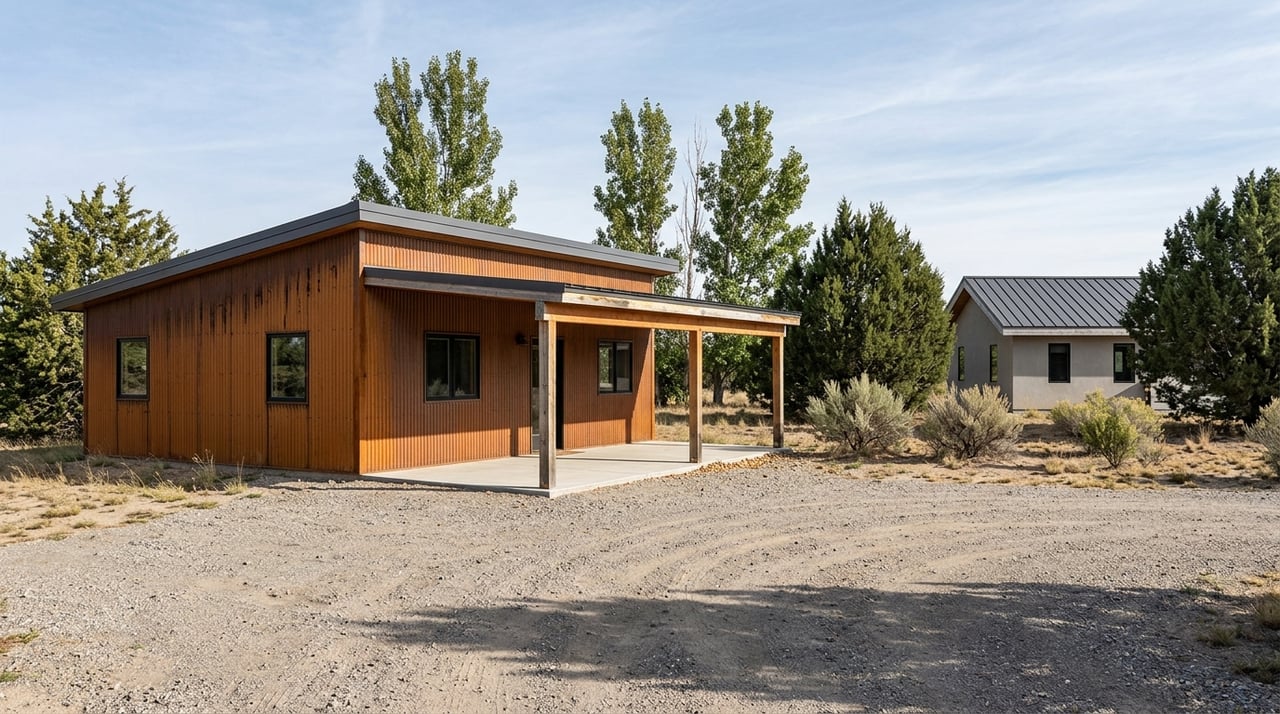
If your goal is a simple getaway, the county does provide workable building paths. Alamosa County requires at least 500 square feet for residential purposes and allows alternative building methods such as earthships, straw bale, shipping containers, and rammed earth if plans are stamped by a Colorado architect or engineer. The county also notes that barndominiums and kit or pre-fab cabins can work if they meet plan review and code requirements, based on its residential guidance.
That flexibility can be appealing if you want a practical, design-forward retreat. Just keep in mind that tiny homes on trailers are treated as RVs and limited to temporary or seasonal use with a permit, rather than functioning as unrestricted permanent housing.
Recreation-oriented land has real appeal
Location matters, and the broader 81136 area benefits from proximity to outdoor destinations. Hooper is about 19 miles north of Alamosa and about 24 miles from Great Sand Dunes National Park and Preserve, according to the Town of Hooper. The park itself highlights experiences like hiking, camping, sand sledding, and night-sky viewing on the Great Sand Dunes National Park website.
That nearby recreation can make retreat-style ownership especially attractive. Still, casual recreation use is different from developing a campground or RV park. Under county standards, campgrounds and RV parks require at least 12 acres, direct frontage on a county-maintained road or state highway, sanitation and potable water standards, and density limits. In other words, larger hospitality-style uses are formal development projects, not simple small-parcel upgrades.
Water and septic can make or break a plan
In the San Luis Valley, water is often the first question and the biggest constraint. The Colorado Division of Water Resources says every new well that diverts groundwater must have a permit, and complete well permit applications can take up to 49 days to review. Depending on the proposed use, some projects involving irrigation, domestic animals, or subdivision activity may also need an augmentation plan.
Alamosa County’s FAQ offers a useful rule of thumb: parcels of 35 acres or more may qualify for a domestic well with up to an acre of irrigation, while smaller parcels are generally limited to in-house use only. Because permit terms are highly parcel-specific, you should always verify the actual well allowance before assuming you can irrigate, water livestock, or support a certain land use.
Sanitation matters just as much. The county says rural residential property generally needs a legal water source and an OWTS or sewer tap, and composting toilets or graywater systems are not accepted as substitutes for septic under current county guidance.
Your best next step before buying or building
The best land uses in the San Luis Valley are usually the ones that balance creativity with realism. In many cases, that means choosing a use that fits the parcel’s zoning, legal access, water source, septic path, and service limitations before you start pricing buildings or improvements.
A simple checklist can save you time and money:
- Confirm whether the parcel is in unincorporated Alamosa County or within Hooper town limits
- Verify zoning and whether your use is allowed by right or needs review
- Confirm legal access and road conditions
- Check legal water availability and actual well-permit terms
- Confirm septic or sewer options
- Ask whether the parcel is a legal buildable lot
- Review whether your idea counts as residential, accessory, home occupation, agritourism, or a larger commercial use
If you are considering land in the San Luis Valley and want help thinking through property fit, lifestyle goals, and the practical questions that come with rural ownership, Coldwell Banker Collegiate Peaks Realty is here to help with local insight and a personalized consultation.
FAQs
What are the most realistic small-parcel land uses in Alamosa County?
- The most realistic options are usually a fenced garden, a small greenhouse, up to ten chickens, a low-impact home-based business, or a modest guest space tied to the main dwelling.
Can you live in an RV on land in the San Luis Valley?
- Alamosa County may allow temporary RV occupancy for up to 180 days per year, or up to two years during residence construction with annual renewal, if code and OWTS requirements are met.
Can you build a tiny home on land near Alamosa or Hooper?
- In Alamosa County, tiny homes on trailers are treated as RVs and are limited to temporary or seasonal use with a permit rather than unrestricted permanent residential use.
What should you verify before buying land in ZIP code 81136?
- You should verify zoning, legal access, buildability, legal water, septic or sewer options, and whether county rules or Hooper town rules apply to the parcel.
Can smaller parcels in Alamosa County irrigate gardens or support animals?
- Sometimes, but well allowances are parcel-specific, and the county notes that smaller parcels are generally limited to in-house use only unless permit terms say otherwise.
Are campgrounds or RV parks easy to start in Alamosa County?
- No. These are regulated as larger formal development projects and require at least 12 acres plus road frontage, water, sanitation, and other county approvals.